
A doorway frames the activity you want to photograph, but a sliver of someone’s backpack enters from the right. A pale awning fills one corner. Along the bottom, a cropped scooter mirror becomes a shape with no obvious connection to anything else. The subject may be well placed, yet the boundaries still feel unresolved.
Cleaning up the edges of your travel photos starts with noticing what you included almost accidentally. Before pressing the shutter, look away from the main subject and follow the frame all the way around. Then make the smallest change that removes a distraction while preserving the relationship you wanted to show.
Give the boundary a separate look
Once you have chosen your subject, trace the top, right, bottom and left edges of the viewfinder or screen. Pause at the corners rather than jumping straight back to the center. Look for objects entering the photograph, important shapes leaving it and background lines touching the subject.
This is a practical way to divide your attention. First decide what the photograph is about; then inspect the parts you may have overlooked while concentrating on that subject. In a changing scene, even a brief boundary scan can reveal the adjustment worth making next.
Three questions are usually enough:
- Does anything enter the frame without contributing useful information?
- Have I cut through something whose remaining fragment is confusing?
- Does an edge or background object touch the subject in an awkward way?
You are looking for relationships that feel accidental. A crowded market can remain crowded. A branch can enter from above. The question is whether those elements support the picture you intend to make.
Resolve clipped objects by including or excluding them
A partial object can suggest that a scene continues beyond the photograph. Trouble starts when the fragment is difficult to identify or seems barely attached to the composition. A narrow strip of a parked vehicle may look like an unexplained patch of metal; slightly more of it might establish the street setting, while slightly less could remove it altogether.
Try both directions. Widen or redirect the frame enough to make the object readable, then compare a version that excludes it. Avoid assuming that the tighter photograph is automatically stronger. Removing a basket, doorway or section of pavement may also remove the clue that explains where the activity happens.
For people near a boundary, inspect what the crop leaves behind. A lone hand entering from the side can suggest another person participating in the scene, or it can become a disconnected distraction. If the gesture matters, include enough surrounding information to explain it. If it adds nothing, reframe or wait for it to leave.
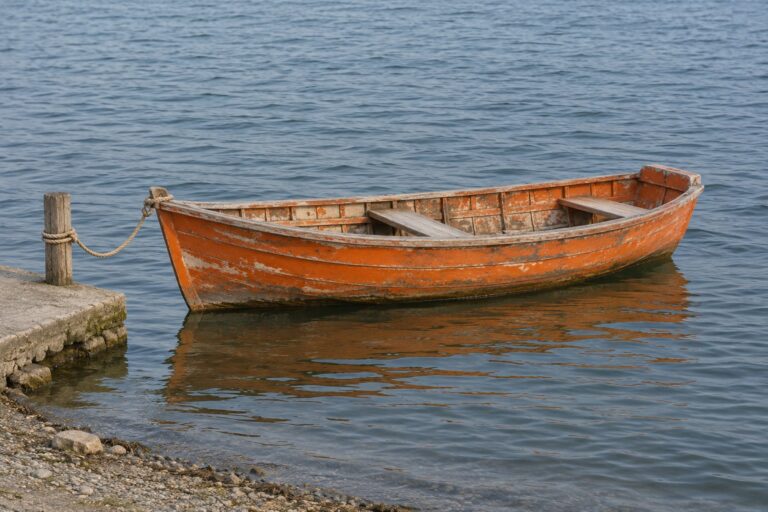
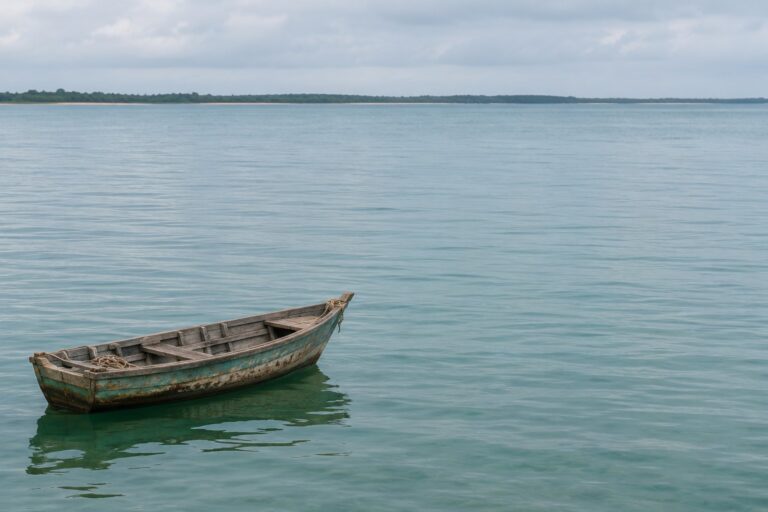
Consider a hypothetical harbor photograph with a boat as the main subject and half a bollard along the bottom edge. Including the complete bollard might connect the boat to the quay. Excluding it might produce a simpler arrangement of boat and water. Leaving a small, unrecognizable slice may achieve neither intention.
Watch for bright corners and strong color fragments
Look for a pale patch of sky, a sunlit sleeve or a strip of vivid fabric near the boundary. Ask whether it deserves the emphasis it receives in your composition. A small fragment can feel surprisingly prominent when the surrounding scene is darker or quieter.
Start with framing rather than changing the appearance of the entire photograph. A slight upward adjustment might remove a bright pavement strip but introduce more sky. Moving sideways might hide a pale wall behind a column while keeping the subject in place. Judge the new frame as a whole, because every exclusion creates another boundary.
Keep a bright element when it has a useful role. An illuminated doorway may explain where someone is heading. A patch of sky may give a narrow street breathing room. The practical test is whether you can describe what the element contributes beyond simply being present.
If you find yourself repeatedly trimming different corners, reconsider the viewpoint. A position with fewer competing elements may serve the photograph better than a series of increasingly tight compromises.
Separate shapes that only just touch
A pole appearing to grow from someone’s head, a roofline touching a hat or a boat mast lining up with a window edge can make separate objects difficult to read. These accidental contacts are often called tangencies. Look for them near the frame boundaries as well as around the main subject.
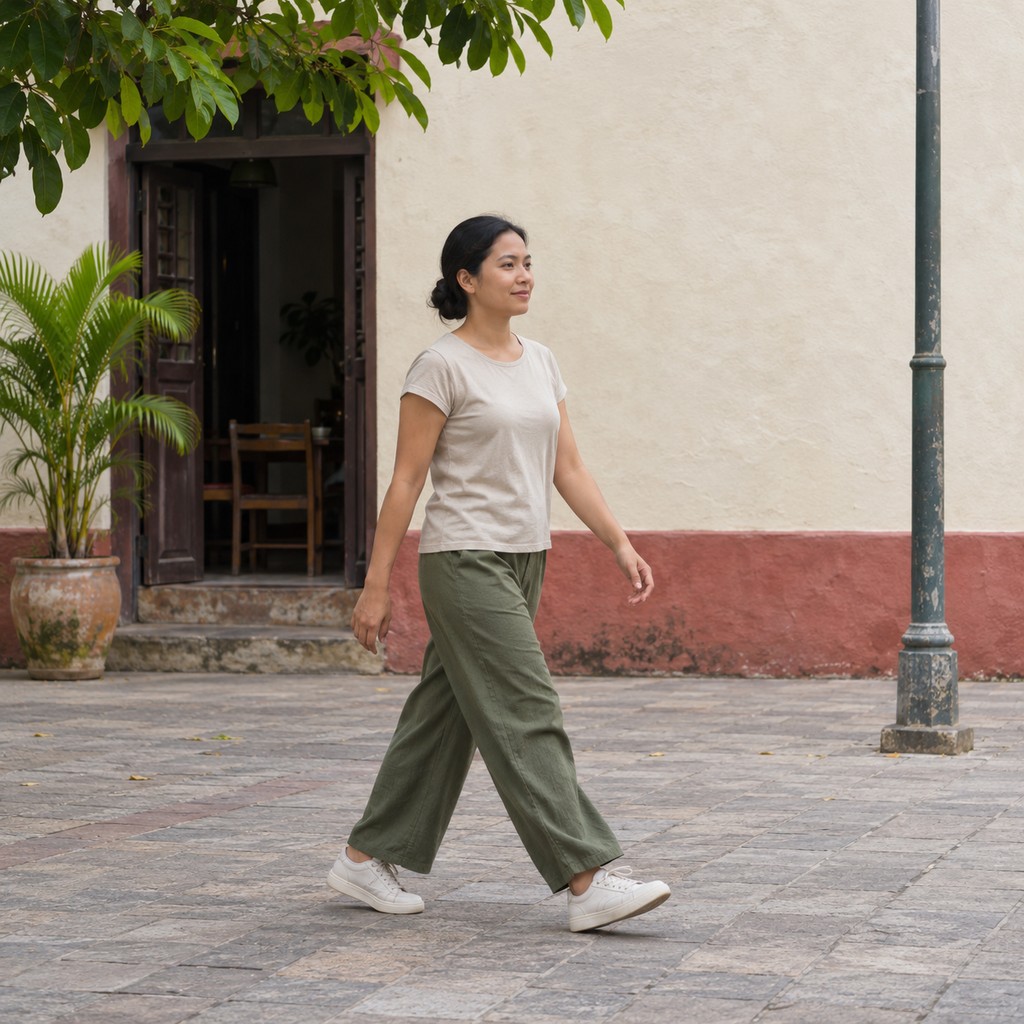
Try a small sideways movement and watch whether the overlap separates. Changing camera height may help when a horizontal background line crosses a face or an important object. Keep watching the relationship as you move; the useful adjustment depends on the particular arrangement, rather than a prescribed distance.
Sometimes a clear overlap works better than a tiny gap. If a foreground shape is meant to frame the scene, let it do so decisively. An arch occupying a substantial part of the boundary can establish a viewpoint; a thin, unexplained strip of the same arch may simply look overlooked.
For a moving person, waiting may be the cleanest solution. Let the figure reach an open section of background instead of asking them to change an ordinary activity for your composition. Keep paths clear and stay within the space available to you.
Choose the adjustment that solves the actual problem
Changing where you stand, turning the camera and narrowing the framing offer different ways to reorganize a scene. Choose according to the unwanted relationship, then check what else changed.
| What you notice | Adjustment to try | What to preserve |
|---|---|---|
| A small unrelated object enters from one side | Turn the camera slightly or frame more tightly | Enough setting to explain the subject |
| A background pole touches a person | Move sideways or change camera height | The gesture and useful background |
| A foreground fragment fills a corner | Try another height or position | Any foreground connection that adds meaning |
| A passerby is partly inside the boundary | Wait for a clearer arrangement | The moment that makes the scene interesting |
If your camera or lens allows a narrower view, use it when the photograph genuinely needs less surrounding space. If you need to separate overlapping objects, investigate your position instead of only tightening the frame.
Also distinguish clutter from an unwanted change in shape. A person stretched near a wide-angle corner presents a different problem from a bag intruding at the edge. The guide to controlling stretched edges and converging lines in wide-angle travel photos explores placement and geometry in more detail.
Leave room for the moment to change
A frame that looks tidy before someone moves may become cramped when they lift a hand, turn their head or carry an object forward. When the gesture matters, allow space for the action you are watching rather than fitting the current outline as tightly as possible.
That margin should still feel deliberate. Look at the open area and ask whether it gives the subject somewhere to move or merely includes another distraction. If useful surrounding space is central to the picture, the companion article on using negative space without making a travel photo feel empty develops that separate decision.
For a fleeting moment, take the available photograph rather than losing it while perfecting a corner. If the scene continues, use the next opportunity to improve the boundary. For a static subject, you can spend longer comparing a wider and tighter version.
Keep the context that earns its place
A clean edge does not require an empty edge. Market awnings, foreground foliage and people entering a street scene can all help describe a place. Preserve them when their shape, position or relationship contributes something you want the viewer to understand.
Before moving on, compare the revised frame with your original intention. Can you still tell what attracted you to the scene? Have you removed useful context along with the distracting fragment? The strongest correction may be a small shift that makes the boundary feel considered while leaving the life of the scene intact.