
A basket at the edge of a market stall can become two very different photographs. One shows an attractive woven pattern. The other includes the handle, the goods inside and the edge of the counter, making the basket’s relationship to the stall visible. Neither approach is automatically stronger, but they contribute different information.
Meaningful travel detail photos give the viewer something specific to notice: a connection, a material, an arrangement or a small action that the wider photograph leaves unresolved. Getting closer is only part of the decision. You also need to decide what the detail explains and how much surrounding information it needs.
Look for the missing information
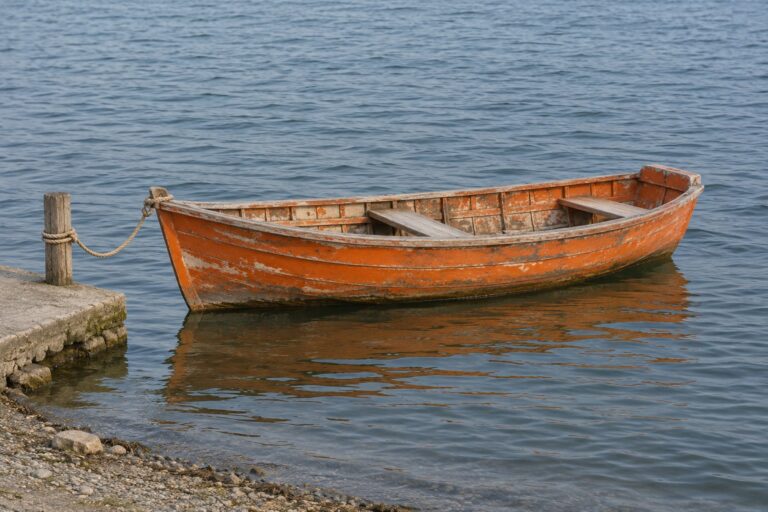
Before searching for small subjects, look at the photographs you already have. If your wider view establishes a waterfront landing, what remains difficult to see? Perhaps the way a rope passes around a post, the meeting of wet steps and water, or the arrangement of equipment beside a boat.
Each possibility develops a different part of the scene. The rope shows a connection. The steps describe an edge between surfaces. The equipment reveals an arrangement within a working space. Choose the observation that serves the story you are actually making.
A useful question is: What will someone understand after seeing this photograph that they could not understand before? An answer such as “the surface is patterned” can be enough when materials are your subject. If your story concerns how people move between shore and water, that pattern may need a clearer connection to the landing.
The broader guide to telling a place’s story through travel photos explains how setting, activity and detail can support one another. Here, concentrate on the information that deserves a closer look.
Choose a relationship, not just an attractive object
Start with objects in relation to something else. A cup beside a serving opening, a latch within its door or a basket beneath a counter offers more possibilities than an isolated object whose surroundings have disappeared.
Look for three kinds of connection:
- Object and setting: a mooring rope alongside the edge of the landing it connects to.
- Part and whole: a door fitting with enough of the door remaining to explain its position.
- Repeated element: a basket glimpsed in the wider photograph, now shown closely enough to reveal its construction or contents.
These are starting points for observation, rather than subjects to collect at every stop. Follow what is present. If nothing small develops your story, another relationship or activity photograph may contribute more.
Be careful with traces of use. A worn handle gives you a visible surface to photograph; it does not tell you who used it, how old it is or what it means to a community. Compose around what you can see. Verify any additional explanation before putting it in a caption.
See more: Foto Lebar, Menengah, dan Detail: Membagi Informasi dalam Cerita.
Find the distance that keeps the detail understandable
The tightest frame is not always the most informative. Move close enough to make the important feature clear, then ask what has disappeared. If the viewer can no longer identify the object or its connection to the setting, step back and try again.
For a hypothetical market photograph, begin with a basket and the edge of its stall. Then make a closer version showing the handle and contents. Finally, isolate a section of weaving. Compare the three: the first locates the basket, the second explains something about it, and the third emphasizes its surface. Choose according to the information missing from your sequence.

Check the frame’s edges as carefully as its center. A small strip of counter might be enough to locate the basket. An unrelated bright bag behind it might compete for attention. Shift your position or adjust the framing until the useful relationship remains clear without unnecessary fragments.
You can also use the wider photograph to carry some context. A close view does not have to explain the entire location if the previous image already establishes it. However, the connection should be visible through a shared object, material or arrangement. Do not rely on a long caption to explain why two unrelated-looking photographs belong together.
If the problem is understanding the overall setting, return to choosing a viewpoint and foreground for a wide view. Adding more close photographs will not reveal a route or spatial connection that none of the images shows.
Let light reveal the feature you chose
Once you know what matters, inspect how it appears in the available light. Can you distinguish the layers of a folded material? Is a reflection covering the join you wanted to show? Does a bright patch pull attention toward an irrelevant corner?
Try a different position before accepting the first view. Compare whether the surface, outline or connection becomes easier to read. You might prefer one angle for its visible texture and another for the way it separates the object from its surroundings. Let the subject decide which result matters.
Keep surrounding information deliberate. A softly rendered background may suit a photograph about a small surface feature, but it may undermine one about an object’s position beside a doorway. Review whether the context you intended to retain is still recognizable. There is no benefit in isolating the subject so completely that its contribution to the story disappears.
Work through one detail with a clear intention
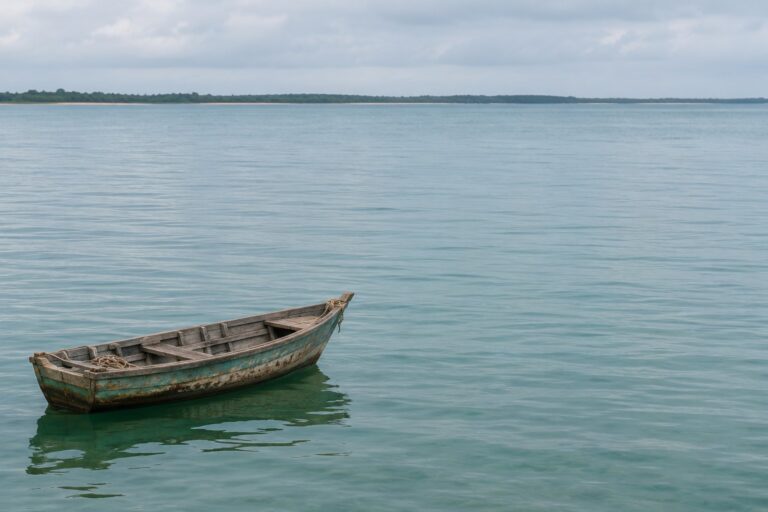
Imagine that your wider waterfront photograph includes a boat beside a landing. You want a closer frame to show the physical connection between the two.
Begin by following the visible rope with your eyes. Find a permitted position from which the attachment and a useful portion of its surroundings are readable. Leave equipment where it is, and stay out of working routes. If the connection cannot be photographed without interfering, choose another subject.
Make one frame that includes the rope and its attachment point. Then try a tighter version emphasizing the fibers and contact with the post. Ask which photograph explains the connection more clearly. The tighter image might reveal more surface detail while concealing where the rope leads.
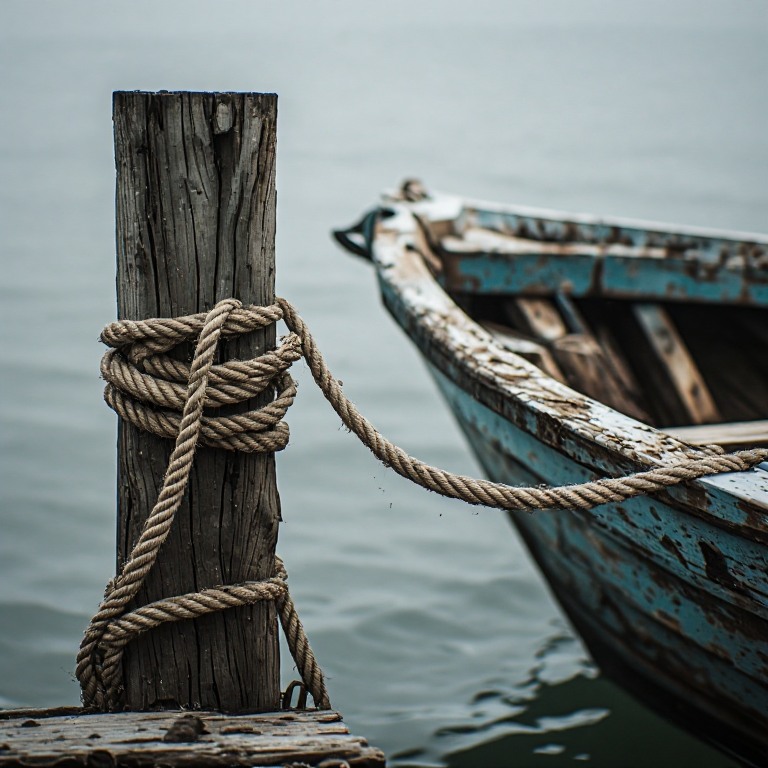
Finally, compare the chosen frame with the wider view. Does a recognizable post, boat edge or section of landing connect them? If so, the detail can draw attention to something the viewer has already encountered. If the connection remains unclear, a slightly looser photograph may do the job better.
This exercise gives each variation a purpose. You are testing how much information to include, rather than making a series of almost identical close-ups.
Keep the details that change the sequence
When selecting photographs, place each detail beside the wider image it relates to. Look for a clear addition: a material becomes visible, an attachment is explained or a small arrangement becomes understandable.
Then compare your detail photographs with one another. Several appealing textures may perform the same job. Keep another only when it changes what the viewer notices. A rough rope and a rough wall can look different while adding little beyond a repeated emphasis on surfaces.
Write a plain caption before reaching for an interpretation. “Rope looped around a post beside the landing” describes visible content. Claims about traditional practice, age or local identity need evidence beyond the photograph. If you cannot support that explanation, keep the description specific and modest.
A detail can also provide a quieter pause between busier frames, provided it still belongs to the subject. Its contribution need not be dramatic. It simply needs to reward the viewer’s closer attention.
Before leaving a scene, look once more at what your wider photograph cannot show. Find a small observation that develops that missing information, and frame enough of its surroundings to make the connection understandable.