
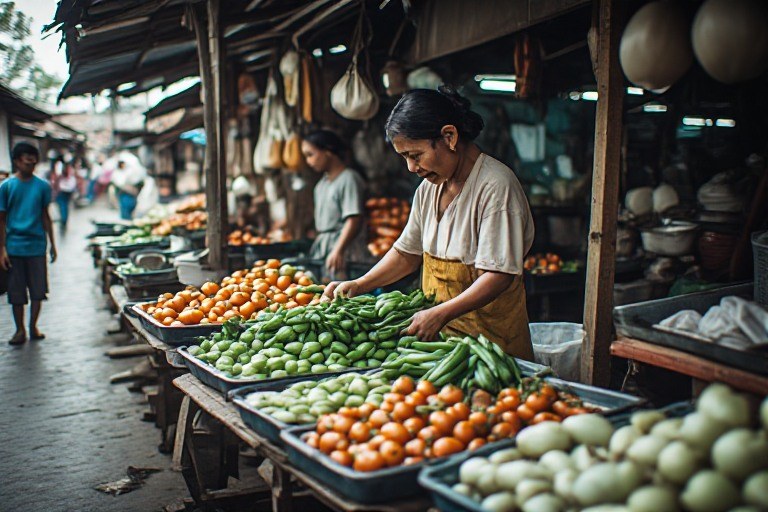
A person arranging produce can explain more about a market than another photograph of its entrance. But if the frame reduces that person to a splash of color between baskets, it may reveal more about your composition than their activity.
When photographing everyday activity, look for the relationship between a person, what they are doing and the space they use. Then decide whether making the photograph is welcome, how much context it needs and when to put the camera down.
Start with the activity you can actually see
Describe the scene to yourself with a simple verb: sorting, repairing, carrying, waiting, meeting. This gives your photograph a specific purpose. Instead of searching for someone to complete an attractive background, look for the surroundings that explain their action.
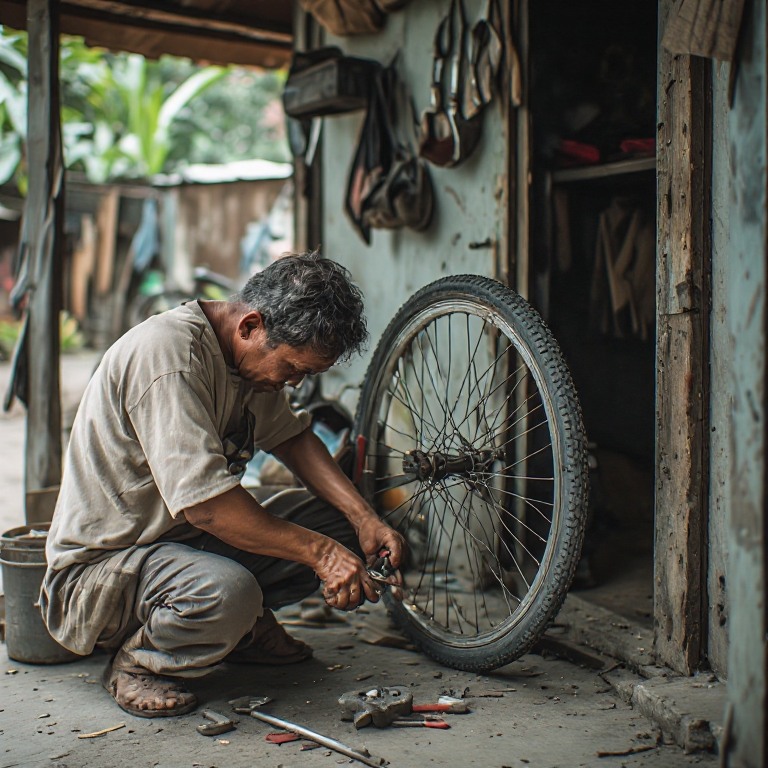
Imagine an adult repairing a bicycle outside a small workshop. The useful relationship might be between their hands, the wheel and the tools within reach. A tight face portrait would tell a different story. A distant view containing only a tiny figure might conceal the repair entirely.
Stay within what you observed. Someone sitting beside a stall is not necessarily its owner; someone carrying a basket is not evidence of a disappearing tradition. If that distinction matters to your caption, ask rather than supplying a story yourself.
This narrower approach fits within building a place’s story through connected travel photos: an activity photograph contributes one observation, rather than claiming to explain an entire community.
Make room for a real choice
For a close photograph centered on an identifiable person, make asking permission your default approach. Keep the camera lowered, introduce your interest briefly and explain the intended use. A request to photograph someone for a personal album should not quietly become permission to use their portrait in an advertisement.
A practical request could be: “May I photograph you working, with the stall around you? I would like to share the photograph on my travel blog.” Use words the person understands, and leave space for a refusal. A smile or an uncertain nod is a reason to clarify, not an invitation to keep shooting.
If someone declines, turns away or appears uncomfortable, lower the camera and move on. Avoid following them or changing lenses to obtain the same photograph from farther away. Buying something also does not create an obligation to pose.
Asking can change the scene. Someone may pause or look toward you. Accept that change; with their agreement, you can wait while they resume their activity. Do not ask them to repeat a transaction or recreate a gesture and later describe the result as an unprompted moment. The NPPA’s visual ethics guidance emphasizes dignity, context and accurate representation. Those principles are useful for travel photography even though the guidance addresses visual journalism.
These are ethical working recommendations. They do not establish permission for a particular venue or intended use; check the relevant requirements separately.
Choose distance for both context and comfort
Stand where you can remain visible without blocking the activity. Keep doorways, customer access and working routes clear. If making the frame requires someone to repeatedly work around you, change your position or stop.
Distance changes the relationship you can show. From across a lane, you might explain how a stall connects with passing customers. Closer, with permission, you might show the connection between a gesture and an object. Choose the position that makes that relationship readable while respecting the person’s space.
A longer lens can help frame an activity from a position that leaves room for work. It should not become a workaround for a refusal. Equally, a wider view is useful only when its extra surroundings contribute information; including more of the street does not automatically make a photograph more considerate.
Try a viewpoint at roughly the person’s eye level before seeking a dramatic angle. Then inspect the frame edges: have you included a private interior, an unrelated customer or personal information on a counter? Shift your position before pressing the shutter.
Keep the surroundings that explain the action
Simplify distractions selectively. A workbench, stack of containers or doorway may tell the viewer where the activity belongs. Removing all of them can leave an attractive gesture with little sense of place.
Look for three connected elements: the person, the action and one environmental clue. They need not occupy equal space. In the bicycle-repair example, the worker and wheel could dominate while the workshop entrance supplies a quieter third element.
Avoid letting an unrelated bright object become the strongest feature. A small step sideways may separate a hand from a cluttered background without asking anyone to move. If you need help organizing the wider setting, the planned guide to choosing a viewpoint and foreground addresses that broader framing decision.
Time the photograph around a readable gesture
Watch how an action unfolds before raising the camera. A hand resting on a basket says less about sorting than a hand transferring an item into it. Wait for a moment when the action is understandable and the relevant objects are visible.
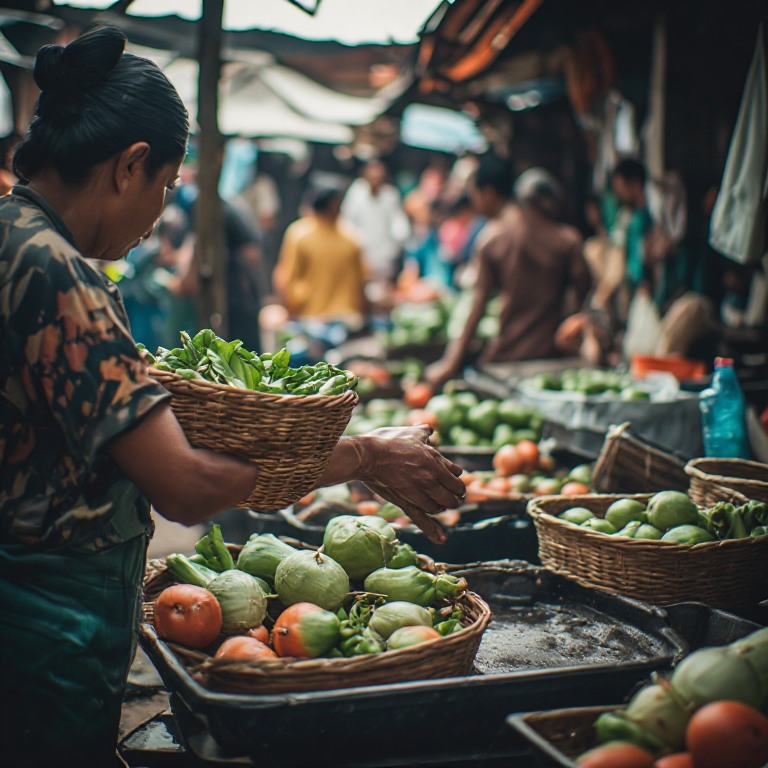
Choose how you want movement to appear. If a hand or carried object needs to look crisp, use a shorter exposure and inspect the result. If slight movement helps convey the activity, allow some blur while keeping enough recognizable structure to explain it. There is no single setting that suits every pace, distance and light level.
Make a small number of deliberate frames, then give the person space. Repeated shooting can become intrusive even after an initial agreement. Stay attentive to their response rather than concentrating only on the camera screen.
Avoid directing someone toward more flattering light when doing so interrupts work or changes what you intend to document. Find a workable position in the available conditions, or accept that this scene may not produce the photograph you hoped for.
Some scenes call for leaving the camera down
Be particularly cautious around children, distress, medical situations, private worship and moments of exhaustion or embarrassment. Visual interest alone is a weak reason to photograph someone in a vulnerable situation.
For an identifiable child, seek permission from a parent or guardian and the child’s willing agreement in language they understand. Do not proceed if either is uncomfortable. UNICEF’s ethical reporting guidelines place children’s dignity, privacy and protection from harm ahead of the value of a story. Permission should not end your consideration of possible harm.
Photographing hands or a person from behind may reduce facial identification, but it does not guarantee anonymity. Clothing, companions and location can still reveal identity. When the context is sensitive, choose another subject or leave the scene unphotographed.
Preserve the meaning when you select and share
Choose the frame that explains the activity fairly. Reject an image if an awkward split-second expression, misleading crop or exaggerated edit turns an ordinary action into something humiliating or dramatic.
Keep captions specific: what happened, where it happened if appropriate, and what you actually know. Do not infer someone’s income, beliefs or feelings from appearance. Avoid publishing names or precise locations that add exposure without helping the viewer understand the photograph.
In a photo set, let this image contribute the human activity while other frames establish the surroundings and relevant objects. The planned article on finding meaningful detail photographs explores that smaller scale without repeating the same scene.
Before sharing, return to the relationship that first caught your attention. The finished photograph should make that relationship clearer while allowing the person to remain someone with their own purpose, choices and day to get on with.