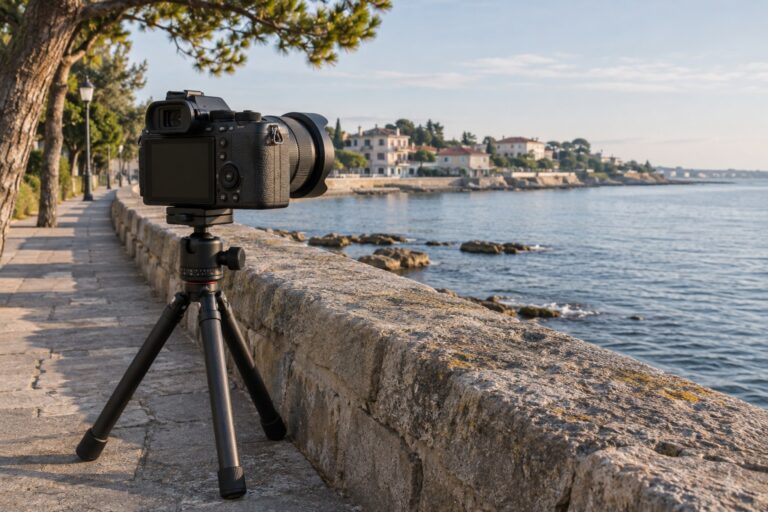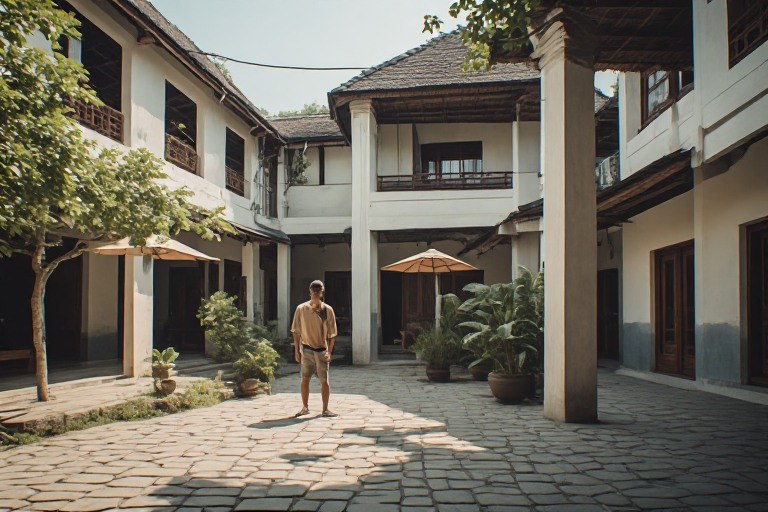

A waterfront is crowded with parked motorcycles, rooflines, mooring ropes and boats. Somewhere inside that view, two painted bows make a clean arrangement against dark water. Including the whole waterfront hides the relationship that caught your attention.
A telephoto lens can help you select that smaller picture. The useful question is what you want to separate from the surroundings—and whether your available position gives it a background worth keeping.
Look for a relationship worth isolating
Before zooming in, describe what makes the scene interesting. It might be a pale balcony against a shaded facade, a boat beneath repeating roof shapes, or one bright umbrella within a subdued street. A narrower frame works best when it makes that relationship easier to read.
Look for three things: a subject, something that supports it, and distractions you can reasonably exclude. The supporting element matters. A boat with a reflection may explain more than a tightly cropped fragment of its hull; a window with surrounding wall texture may feel more connected to the place than the window alone.
Imagine a hypothetical harbour scene where motorbikes occupy the lower edge and a bright advertising panel sits to one side. If the photograph concerns the rhythm of boat bows against the water, tighter framing can remove both distractions while retaining the useful relationship. If it concerns how people reach those boats, the same crop may remove essential information.
That distinction belongs within the broader process of choosing a travel lens by the photos you want to make. Here, the aim is to recognize when a selective view earns its place.
Use focal length to exclude the edges
On the same camera, increasing focal length narrows the angle of view and makes individual elements larger in the frame. Nikon’s explanation of focal length describes this relationship. It is the basic reason a longer lens can leave unwanted surroundings outside the picture.
From one position, start with enough coverage to understand the scene, then tighten gradually. Watch what disappears at every edge. Stop when the remaining elements form a readable composition, even if the lens can zoom farther.
Check for partial distractions as carefully as whole ones. A small strip of bright sky, half a sign or a rope entering a corner can still pull attention away. Sometimes loosening the frame slightly produces a more deliberate boundary than squeezing the subject against every edge.
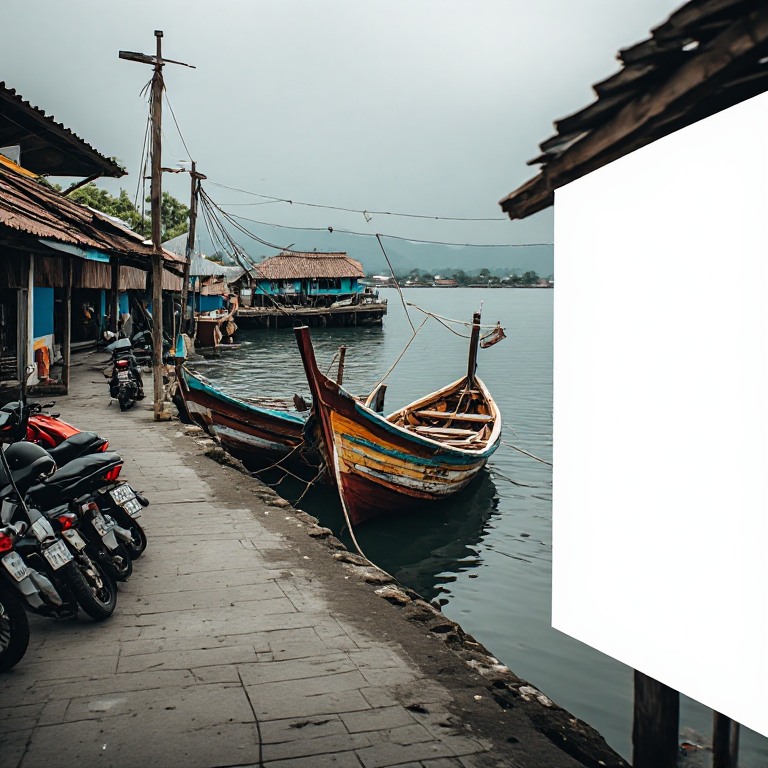
Tighter framing cannot remove something directly behind the subject. If a pole appears to grow out of a roof ornament, enlarging that arrangement preserves the overlap. You need another viewpoint, different timing or a different subject.
Move to organize the background layers
Separate two decisions: where to stand and how much of the view to include. Camera position controls perspective—the relative sizes and alignment of objects at different distances. Changing focal length from the same position changes framing rather than those underlying relationships. Nikon’s perspective guidance makes that distinction explicit.
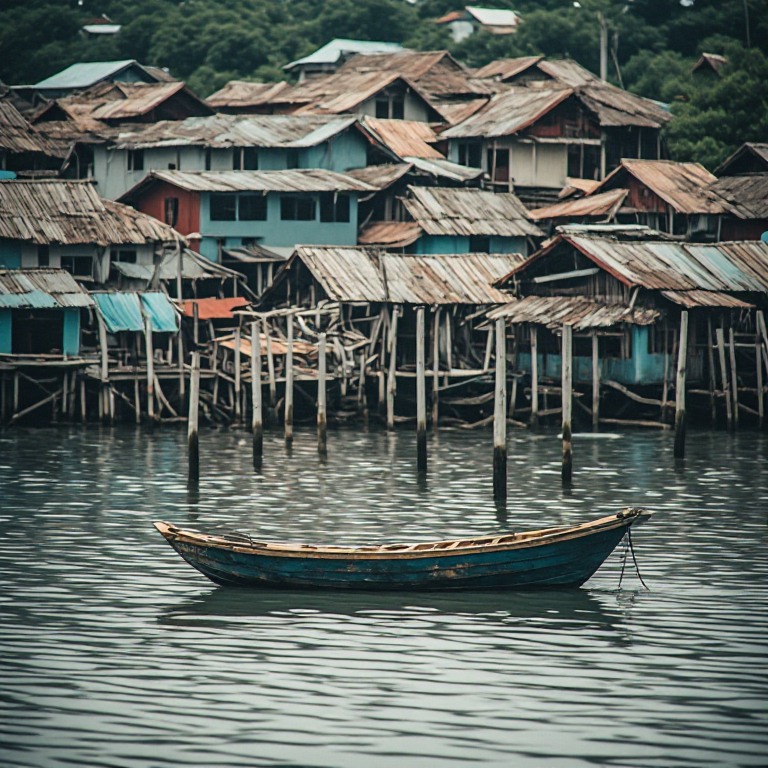
Suppose you want a nearby boat and distant waterfront buildings to share the picture. Moving farther from the boat reduces its size advantage over the buildings. A longer lens can then frame a smaller portion of that view. This combination can produce the layered appearance often called compression; the lens does not physically bring the buildings closer.
That appearance can organize repeating roofs, balconies or hillside buildings into a strong pattern. It can also make unrelated objects seem crowded together. Decide whether the overlap creates rhythm or merely confusion.
Try a small sideways movement before making a large change in distance. From an accessible walkway, a different alignment may place the boat against open water instead of a jumble of railings. Watch the subject’s outline, especially where it touches objects behind it. Move only within safe, permitted space and keep working routes clear.
Simplify before relying on background blur
A recognizable subject can still compete with a bright or strongly colored background, even when that background is soft. Begin with placement: look for a quieter patch, clearer tonal separation or fewer conflicting shapes.
Background defocus depends on several factors, including aperture, focal length, focusing distance and the distance between subject and background. Sony’s guide to factors of defocus explains these interacting controls. A telephoto lens does not guarantee an anonymous backdrop in every scene.
Choose aperture according to what needs to remain readable. If the picture depends on the relationship between a boat and waterfront buildings, turning the buildings into unrecognizable patches may weaken it. If a small architectural detail is the subject, softer surroundings may help it stand out.
Make a comparison when the scene allows: one frame with more background definition and another with less. Judge whether the softer version removes distraction or removes meaning. The most blurred background is not automatically the clearest photograph.
Leave room for timing and movement
A frame that looks clean while the subject is still may become awkward when someone walks into it. Allow enough space for the gesture or movement you want, and watch the background opening where that movement will be easiest to read.
For example, a person crossing a pale wall may form a clearer shape than the same person overlapping a doorway and parked scooter. Waiting for separation can improve the photograph without requiring a longer focal length. Avoid asking strangers to repeat ordinary activity simply to tidy the composition.
Check sharpness separately from visual clutter. If the important moving detail is blurred, reconsider the exposure duration rather than tightening the frame further. The guide to choosing shutter speed for the motion you want in travel photos develops that decision. No single shutter speed suits every subject and situation.
Distance also does not remove the need for consideration. Respect requests not to photograph, avoid intrusive attention and accept that some moments should pass without a picture.
Recognize when a tighter view loses the photograph
A telephoto view is less useful when the scene depends on a route through the foreground, the layout of an interior or the relationship between people and their wider surroundings. If removing those elements makes the subject harder to understand, keep more space.
It can also be the wrong response when you have not identified a subject. Enlarging an arbitrary detail may produce a cleaner frame while leaving the photograph without a clear purpose. Lower the camera and look again for light, shape, activity or a relationship that deserves attention.
Try a short exercise at an accessible viewpoint. Make a wider frame that explains the setting. From the same position, make a tighter selection that removes something specific. Then, if space permits, change position and adjust the framing again. Compare what changed at the edges with what changed between the layers.
Keep the tighter photograph when its omissions help the viewer understand what remains. A boat against water, a balcony against shadow or a rhythm of roofs can carry a strong travel image—as long as the selected fragment still says something about the place.