
A hillside fills the view, but its slopes seem to merge. Above it, an almost white sky occupies half the frame. Nearby, a row of painted shutters offers a clearer photograph: repeated rectangles, a faded blue wall and one shutter left open. The weather has stayed the same. What changed is the subject’s dependence on shadows.
If you are wondering what to photograph under flat, overcast light, start with subjects held together by color, pattern, outline and differences in brightness. You can still make wide views, but choose them for relationships that remain readable without dramatic illumination.
Look for structure that survives without strong shadows
Inspect the scene rather than judging it from the weather forecast. Are small shadows still describing shapes, or do surfaces appear almost equally illuminated? Fujifilm’s natural-light guide identifies diffused overcast light as a different photographic opportunity from hard sunlight. That does not mean every cloudy scene has identical light.
Here, “flat” describes a practical difficulty: light and shade contribute little to separating the important forms. A stone carving might lose its sense of relief, while painted markings on the same stone remain clear.
Before choosing a subject, ask what makes it recognizable from your position. If the answer is mostly a shadow that is currently missing, look for another feature or another photograph. For the broader relationship between direction, softness and contrast, see reading natural light before choosing your travel photo.
Photograph color relationships
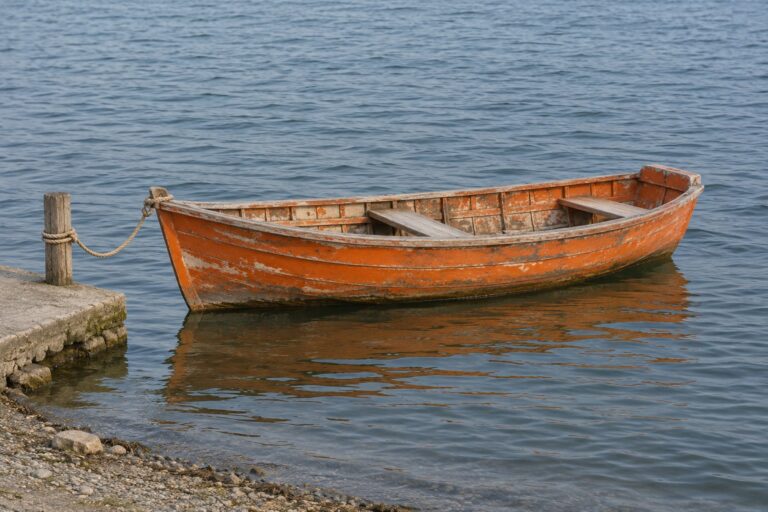
Look for a small number of colors with a clear relationship: an orange boat against blue-gray water, green leaves around a pale doorway, or red baskets arranged against a muted wall. The useful feature is the arrangement of colors, rather than simply how vivid each object looks.
Choose one color to lead. Then inspect everything around it. A second equally strong patch at the edge may divide attention; a larger quiet background may help the subject stand out. Move sideways or tighten the frame until the relationship becomes easier to understand.
For example, imagine several painted boats along a shore. The broad view includes a bright sky, scattered equipment and unrelated buildings. A closer frame containing two hulls and the strip of water between them may communicate the color relationship more clearly while retaining enough boat shape to explain the scene.
Do not assume that a cloudy photograph needs aggressive saturation. First decide whether the colors occupy useful parts of the frame. Increasing their intensity cannot resolve a confusing arrangement.
Find repeated shapes with one meaningful difference
Windows, roof tiles, baskets, mooring posts and folded umbrellas can give a photograph structure when shadows contribute little. Look for repetition that is easy to recognize, then decide whether an interruption makes it more interesting.
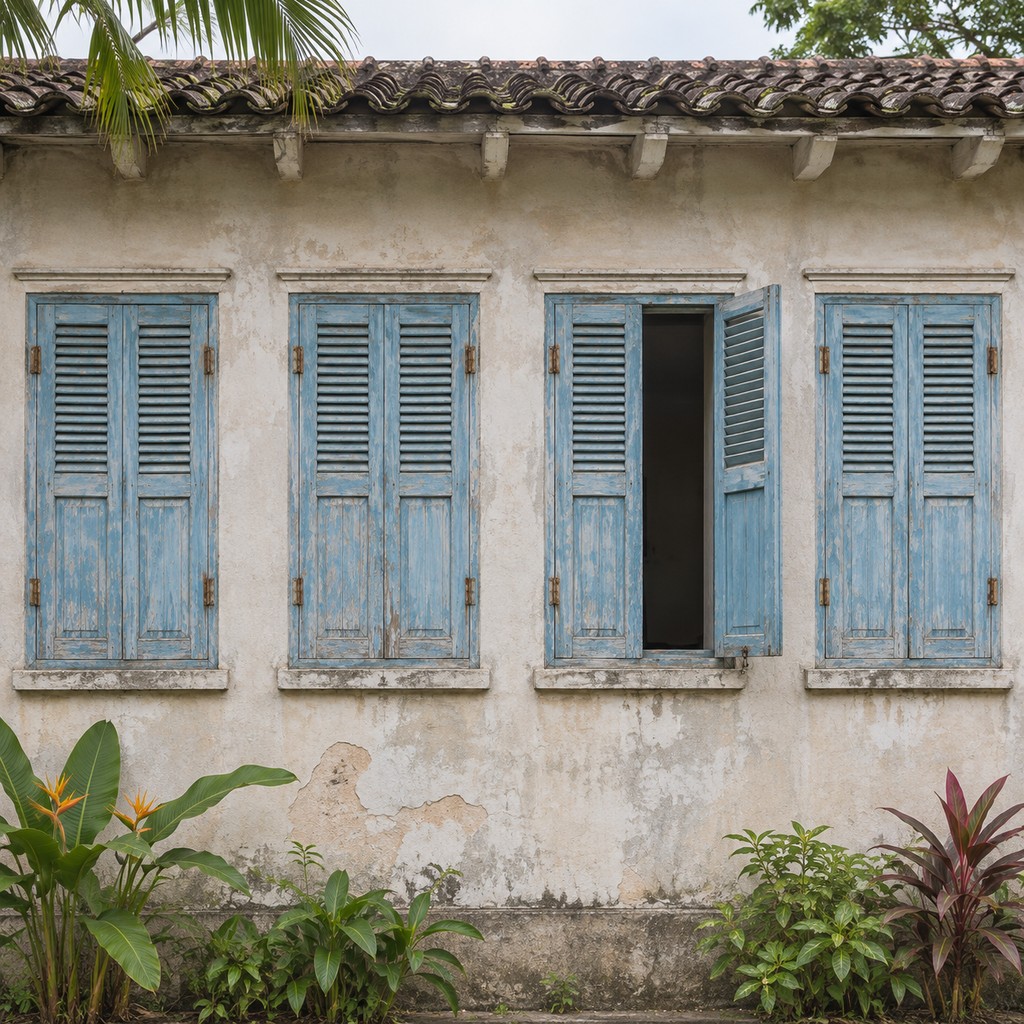
A row of closed shutters establishes a rhythm. One open shutter changes it. Several identical baskets create a pattern; one turned sideways reveals their shape. The difference should be visible enough to matter without requiring a caption to explain where to look.
Your camera position controls how clearly the pattern reads. A more frontal view may organize a facade into simple rectangles. An angled view may show the row receding through space. Compare both where access allows, and choose according to whether the picture should emphasize arrangement or depth.
Keep pattern separate from surface relief. Painted stripes may remain distinct in even light, while shallow grooves need more helpful shadows to appear dimensional. The companion guide to using side light to reveal texture develops that different visual problem.
Separate subjects through brightness and overlap
When strong shadows disappear, pay closer attention to the brightness of the objects themselves. A pale boat can remain readable against dark water. A dark branch can form a clear shape against a light wall. Several similarly gray objects may merge even when each is individually interesting.
Move until the important outline sits against a useful background. If a pale post disappears against a pale building, a small sideways step might place it against a darker doorway. Watch the whole outline: separating the top while leaving the base tangled with another object may still produce an unclear photograph.
For a wider scene, look for distinct layers. A dark foreground railing, a lighter waterfront and a more subdued distant shore can establish depth through their arrangement. Leave visible gaps where those gaps help explain the space; overlapping everything can turn layers into clutter.
Black and white is worth considering when brightness and shape already carry the picture. It is less useful when the subject depends on two colors that become similar grays. Try judging the scene without its color before committing to that treatment.
Give the sky a specific job
An overcast sky can provide quiet space around a strong outline. It can also become a large, bright area that contributes little. Decide which role it plays before automatically including it in a landscape or architectural frame.
Keep it when it helps isolate a roofline, describes the weather or creates breathing room around a clear subject. Reduce it when the interesting relationships are on the ground and the sky adds neither shape nor useful context.
Try two compositions from the same position: one including the horizon, another concentrating on the land or buildings below it. Compare what each photograph explains. A tighter frame is useful only if the remaining arrangement is stronger; removing the sky does not automatically create a subject.
If the clouds contain distinct bands or openings, reassess them. The sky may now offer structure that was absent a few minutes earlier.
Look closer without losing the place
Small subjects can offer more manageable relationships than a broad view: leaves beside a tiled step, ropes crossing a painted hull, or stacked containers beneath an awning. Choose a detail with an identifying feature so the photograph retains a connection to its surroundings.
For a boat detail, include a curve of the hull or a recognizable fitting alongside the paint. For an architectural detail, a hinge or window edge can explain where the pattern belongs. Move closer until the relationship becomes clear, stopping before every clue to the object disappears unless abstraction is your intention.
Everyday activity can also provide a subject through gesture and timing. Hands arranging goods may remain expressive without dramatic light. Photograph respectfully, keep access clear and avoid asking people to repeat ordinary work merely to complete your composition.
Turn one gray view into a small set of possibilities
Imagine arriving beside a waterfront beneath continuous cloud. The broad scene contains pale water, gray buildings and a nearly featureless sky. Instead of repeating the same wide frame, identify three possible photographs.
First, find a color relationship: perhaps a painted hull against the water. Second, look for a pattern: a row of posts with one leaning away. Third, search for tonal separation: a dark rope crossing a light deck. These are hypothetical subjects, but the sequence gives your search a purpose.
For each frame, decide what must remain clear before adjusting the camera. Inspect whether movement or missed focus has obscured that feature, and whether important pale surfaces still show the detail you wanted. Cloud cover alone does not prescribe a setting.
You may still return to the wide view. Give it a foreground shape, a readable arrangement of layers or a deliberate expanse of quiet sky. The useful question is whether the photograph has something clear to show in the light you actually have.